An honest guide to the cost of living as an international student in Leeds

Posted:

Written by: Saritha Prasad, India – MBA 

Moving abroad is exciting, terrifying, and expensive – especially if you’re a student. When I decided to pursue my studies in Leeds, I knew I had to get real about money. As an international student from India, managing living expenses in a new country where even the weather was unfamiliar was overwhelming. But now, after navigating life here, I want to share my real-life budget so you have a clearer picture of what to expect. 

This blog will cover everything from rent and bills to grocery hacks and student discounts, based on my personal experience living in a shared house in Armley, Leeds. 

Accommodation Costs: The Shared Life 

Let’s start with what takes up most of any student budget – rent. 

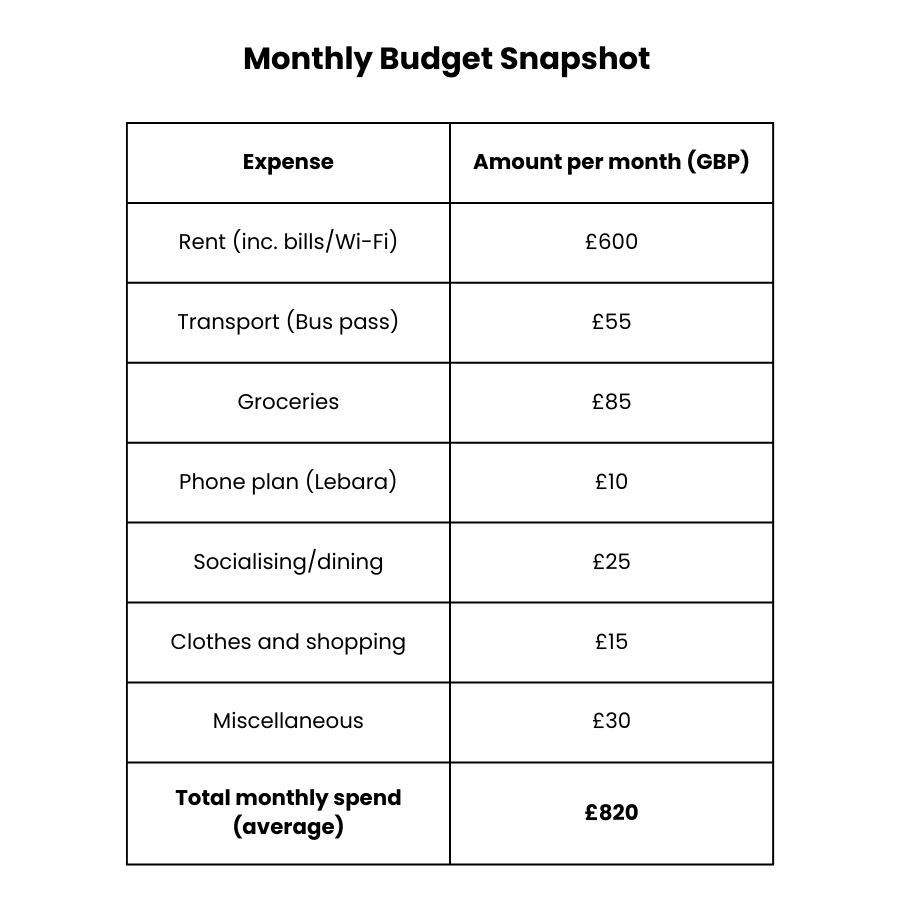
I lived in a shared accommodation in Armley, which cost me £600 per month. This might sound steep, especially considering: 

  • There were 8 students in the house. 
  • We had one shared kitchen and only one bathroom (yes, one!). 
  • The house was functional but far from fancy. 

But here’s the upside: the rent included all utility bills and Wi-Fi, which made budgeting easier. No separate bills for heating, electricity, or broadband. In the UK, those can add another £60-£90 per month, so I considered this a win.  

LBU area

If you’re someone who needs more privacy, a studio apartment or university-managed accommodation could cost anywhere between £750 to over £1,000/month. 

I also had friends living in Hyde Park and Headingley in shared houses who paid between £400-£500 per month, but they had to pay for Wi-Fi and bills separately. So in comparison, my rent may have been higher but more predictable, as bills were included. 

Tip: Use platforms like Unipol, which lists trusted student accommodations in Leeds. They’re safer and often come with helpful student-friendly features. Through Unipol, you can filter based on whether bills are included, and check landlord reviews—something I found incredibly reassuring before signing a contract. 

Leeds Building

Utilities and Wi-Fi: All-Inclusive (Thankfully!) 

One thing that made budgeting easier was that my rent was all-inclusive. If you’re in a place where that’s not the case, here’s a rough monthly estimate: 

  • Gas/Electricity: £40–£60 
  • Water: £10–£20 
  • Wi-Fi: £20–£30 (split between housemates) 

These costs can spike in winter months when heating becomes a necessity. UK winters are long and damp, so indoor heating is essential. Knowing that I wouldn’t get any surprise bills was a huge stress relief.

Transport: Monthly Bus Pass is a Lifesaver 

Since I didn’t have a car or bike, I relied on First Bus to get around the city. I used the monthly student bus pass, which cost around £55–£60. 

This gave me unlimited travel, and it was essential for getting to university, grocery stores, or simply exploring Leeds. 

If you prefer biking, Leeds does have a cycle-to-campus culture, and students often buy second-hand bikes for £50-£80. 

Tip: Always get the student discount bus pass. It’s easy to apply online and the savings add up quickly. Also, downloading the First Bus app can help you track buses live, and find real-time travel updates.


Grocery Shopping: Budgeting with a Desi Twist 

As an Indian student, I wasn’t going to survive on plain sandwiches and frozen pizza. I needed masalas, rice, dal, and of course, chai. 

Here’s where I shopped: 

  • Abu Bakr Supermarket: Affordable Indian staples
  • Continental Supermarket: Great for spices, rice, and lentils 
  • Asda/Tesco: General groceries, bakery items, milk, eggs, etc. 

My top grocery hack? I became a regular at the “Reduced to Clear” sections at Asda and Tesco. They restock it three times a day (around 11 am, 4 pm, and 8 pm), and I’ve managed to buy everything from fruits to sandwiches at massive discounts. I once bought 6 bananas, a loaf of bread, and ready-to-eat salad for just £1.50! 

I also downloaded the Too Good To Go app, which allows you to collect surprise bags of leftover food from cafes and bakeries for around £3-4. It’s sustainable and budget-friendly. 

  • Weekly grocery spend: £20–£25 
  • Monthly grocery spend: £80–£100

Eating Out & Socialising: Minimal but Meaningful 

I’m not a party person. I don’t drink or smoke, and I mostly cook at home, which saves a lot of money. But that doesn’t mean life was boring. 

We often cooked group meals during festivals or birthdays in the shared house, which was fun and inexpensive. Diwali dinners, Onam Sadya on banana leaves, biryani nights – these little get-togethers made the house feel like home. 

For the occasional day out, Leeds offers many free or low-cost social activities: 

  • Walks in Roundhay Park 
  • Free events at Leeds Art Gallery or Royal Armouries 
  • Student movie nights (some as cheap as £2!) 

Here’s my real-life budget for socialising:  

  • Occasional dine-out: £10–£15 per meal 
  • Monthly social expenses: £20–£30 
LBU Building

Clothing & Winter Prep: Cold Reality for a Tropical Girl 

Coming from India, I had zero winter gear. Leeds gets cold, windy, and wet – especially from October to March. So I had to invest. 

Where I shopped: 

  • Primark: Affordable winter jackets, thermals, boots 
  • Vinted app: Second-hand clothes, often new-like and cheap 
  • Charity shops: Found a Marks & Spencer coat for £10! 

Total winter clothing spend: ~£80–£100 (initial investment) 

Tip: Start buying winter wear by early October. Prices shoot up later. 


Healthcare: Free Prescriptions (A Blessing!)
 

Since I have diabetes and hypothyroidism, I worried about medical costs. But I qualified for the medical exemption certificate, which means: 

  • All NHS prescriptions are free 
  • No charges for essential medications 
  • Registering with a local GP was easy, and the NHS app helped me book appointments and request medications easily. 
Students in lecture

Other Essentials & Subscriptions 

  • Phone Plan:
    I received a free Lebara SIM during my visa process in Mumbai, which was a lifesaver. After the first month, I continued with Lebara’s £5–£10/month plans that gave me plenty of data and UK and international calls (yes, free calls to India!) 
  • Laundry:
    Our house had a washing machine, so I only spent on detergent (~£5/month). 
  • Miscellaneous:
    From printing assignments to replacing a broken umbrella: 
  • Monthly “miscellaneous” budget: £20–£30 
  • Software & Study Tools:
    Microsoft Office: Free via the university

You could trim this further by:

  • Finding cheaper housing (£400–£500 options exist!)
  • Reducing eating out
  • Sharing groceries and bulk cooking
Expenses

Budgeting Tips That Worked for Me

  • Used Emma app to track every penny.
  • Shopped at reduced aisles for daily discounts.
  • Shared cooking ingredients with housemates.
  • Bought second-hand whenever possible (Vinted, charity shops).
  • Made the most of student discounts everywhere (UNiDAYS, Student Beans).
  • Stayed away from unnecessary subscriptions.
  • Always compared prices before buying anything big (furniture, electronics).
  • Used the university library for textbooks instead of buying.
  • Joined WhatsApp/ Facebook groups where students sold household items second-hand.

Final Thoughts 

Life in Leeds as a student isn’t cheap – but it’s also not unaffordable. With some smart choices, shared living, and a bit of jugaad, you can absolutely thrive here on a student budget. 

Yes, there were sacrifices: less privacy, cold showers occasionally, and a lot of home-cooked dal. But I also gained: independence, new friends, and the joy of making a tight budget work. 

If you’re planning to study in Leeds, I hope this breakdown gives you not just numbers but a real sense of what to expect. Pack your thermals, bring your pressure cooker, and embrace the journey. It’s worth it. 

Wishing you yellow-sticker deals, warm roommates, and rent that’s affordable.  


Ready to learn more? Explore Leeds Beckett University and discover your next step.

Share: